License plates are an important part of registering a vehicle after moving to Maryland. New residents must complete the required title and registration steps through the Maryland Motor Vehicle Administration (MVA). The process may involve proof of ownership, insurance information, identification, an odometer statement, and applicable fees. Maryland vehicle registration requirements can vary based on the vehicle and ownership situation. Knowing which documents to prepare, where to complete the transaction, and when registration is due can help new Maryland residents complete their vehicle registration with fewer delays.
License plates connect your vehicle to its Maryland registration record after you move into the state. New residents generally need to title and register their vehicles with the Maryland MVA within the required period. The process can include submitting ownership documents, proof of Maryland insurance, identification, and vehicle information. Registration fees, title charges, inspection requirements, and plate options can depend on the vehicle type and individual circumstances. Reviewing these requirements before visiting an MVA branch can help you prepare the correct paperwork and complete the registration process efficiently.
Maryland Registration for New Residents
A new Maryland license plate is generally issued as part of the vehicle registration process for people who establish Maryland license plate residency. New residents with an out-of-state vehicle typically need to title and register that vehicle through the Maryland Motor Vehicle Administration (MVA) within 60 days of establishing residency. The process includes providing the required vehicle documents, meeting Maryland insurance requirements, and completing the applicable title and registration paperwork.
- Maryland MVA — New Maryland Residents:
- https://mva.maryland.gov/your-mva-guide/new-maryland-residents
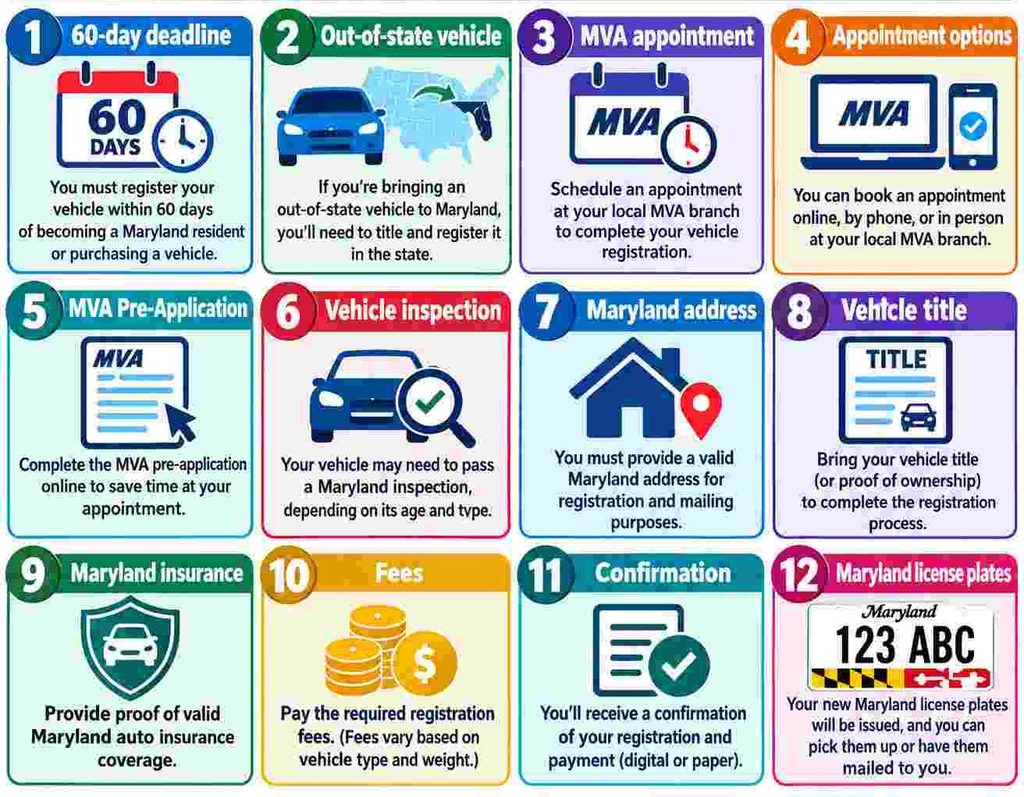
- 60-Day Deadline: After becoming a Maryland resident, vehicle title and registration must generally be completed within 60 days.
- Out-of-State Vehicle: If you have a vehicle titled or registered in another state, you must complete the title and registration process in Maryland.
- MVA Appointment: A Maryland MVA appointment is required for vehicle title and registration.
- Appointment Options: New residents can select from Driver’s License Only, Driver’s License, Title, and Registration, Title & Registration Only, Out of Country, and Returning to Maryland appointment types.
- MVA Pre-Application: The Pre-Application allows applicants to enter owner and insurance information and prepare the required details before the appointment.
- Vehicle Inspection: A valid Maryland Safety Inspection Certificate is generally required for Maryland vehicle title and registration.
- Maryland Address: Applicants may need to provide a valid Maryland driver’s license or proof of a valid Maryland residential address.
- Vehicle Title: The current out-of-state vehicle title is included among the required documents.
- Maryland Insurance: Applicants must provide Maryland insurance information, including the insurance company and policy or binder information.
- Fees: Payment should be prepared for applicable title, registration, tax, and other required fees.
- Online Preparation: The MVA online process can help vehicle owners enter vehicle and insurance information and check estimated fees.
- Confirmation: After completing the online Pre-Application, applicants should bring the confirmation and barcode to their MVA appointment.
- Maryland License Plates: After the vehicle registration process is completed, Maryland license plates, registration cards, and registration stickers are provided according to the applicable registration requirements.
Can You Get a New License Plate Online?
If you are searching for how to get a Maryland license plate, the Maryland MVA allows you to start parts of the title and registration process online. New residents can use online tools to enter vehicle and owner information, provide insurance details, and review an estimated cost before completing the transaction. This can make getting Maryland license plates easier by helping you prepare the required information before visiting the MVA.
Start the Process Online
The online process can help new residents prepare their vehicle registration information before an MVA visit.
Depending on the transaction, you may be able to:
- Enter vehicle and owner information
- Provide Maryland insurance information
- Review an estimated registration cost
- Complete an online pre-application
- Prepare information needed for the registration application
- Receive confirmation or information to bring to the MVA
Is a New MD License Plate Issued Entirely Online?
A new MD license plate transaction for a new Maryland resident should not automatically be treated as a fully online service. New residents may need to complete title and registration requirements through an MVA appointment or at an appropriate MVA branch, depending on their situation. The online system is mainly useful for preparing or starting the transaction. Required documents, vehicle inspection, title requirements, insurance information, and other conditions may still need to be completed before registration and plate issuance.
Documents Needed for a New License Plate
When applying for a new Maryland license plate, new residents should prepare the documents needed for vehicle title and registration. The Maryland MVA uses these documents to confirm vehicle ownership, Maryland residency, insurance coverage, and other registration details. Having the paperwork ready can help make the title and registration appointment easier. The exact documents can vary based on whether the vehicle is owned, financed, leased, purchased recently, or transferred from another state.
New Maryland License Plate Document Checklist
- Out-of-State Title: Bring the vehicle’s current out-of-state title as proof of ownership. This is one of the primary documents used when transferring an out-of-state vehicle to Maryland.
- Maryland Identification: A valid Maryland driver’s license can be used to establish the applicant’s identity and Maryland residency. If the applicant does not have a Maryland driver’s license, acceptable proof of a Maryland residential address may be required.
- Maryland Residential Address: Provide a valid Maryland residential address or acceptable documentation showing the applicant’s Maryland address.
- Proof of Insurance: Have Maryland insurance information available, including the insurance company name, policy or binder number, and agent information when applicable.
- Safety Inspection Certificate: A valid Maryland Safety Inspection Certificate is required for most vehicles being titled and registered. The inspection must be completed through an authorized Maryland inspection station.
- Completed Title Application: If the MVA Pre-Application has not been completed, applicants may need a completed Certificate of Title Application (VR-005).
- Lien Documentation: If a lien exists on the vehicle, provide the lienholder’s required information, such as the lienholder’s fax number, account number, or mailing details.
- Lease Documents: For a leased vehicle, additional information or documents from the leasing company may be required to complete the title and registration transaction.
- Bill of Sale: When applicable, keep the bill of sale or other purchase documentation available, especially for a recently purchased vehicle.
- Odometer Information: Have accurate vehicle mileage or odometer information available when required for the title or registration transaction.
- VIN: The Vehicle Identification Number (VIN) should match the vehicle and the submitted title or other ownership documents.
- Payment: Bring an accepted form of payment for applicable title, registration, tax, and license plate fees.
Before the MVA Appointment
Applicants can use the Maryland MVA’s online process to enter vehicle and insurance information and receive an estimate of applicable fees. The confirmation and barcode can be printed and brought to the appointment. Preparing the out-of-state title, Maryland address information, insurance details, inspection certificate, required applications, and payment in advance can help reduce delays when applying for a new MD license plate.
Safety Inspection for New Residents
Maryland vehicle inspection is an important part of the title and registration process for many people moving into the state with an out-of-state vehicle. New residents who need to title and register an applicable vehicle must provide a valid Maryland Safety Inspection Certificate. The inspection confirms that the vehicle meets Maryland safety standards before the MVA completes the registration process. This step can affect the process of getting Maryland license plates, since plates are issued as part of vehicle registration. New residents should complete the required inspection before their MVA title and registration appointment.
Why Is a Maryland Safety Inspection Required?
Maryland requires an applicable vehicle to pass a state safety inspection before it can be titled and registered. The inspection checks important vehicle components related to safe operation. It is separate from Maryland’s vehicle emissions testing program. The inspection must be completed at an authorized inspection station that is approved to perform Maryland safety inspections. The Maryland State Police oversees the state’s vehicle safety inspection program and sets inspection standards for authorized stations.
Safety Inspection Certificate
After a vehicle passes the inspection, the authorized inspection station provides a safety inspection certificate. This certificate is required when completing the Maryland title and registration process for an applicable vehicle. The certificate is valid for 90 days from the date of inspection. New residents should make sure the certificate remains valid when they complete their title and registration transaction.
What If Your Vehicle Does Not Pass?
If the vehicle fails the Maryland safety inspection, the owner must address the identified safety problems before the vehicle can receive a passing certificate. The inspection station can identify the items that need attention. After repairs are completed, the vehicle can be presented for the required follow-up inspection. A valid passing certificate is needed before an applicable vehicle can complete the title and registration process.
Exceptions and Temporary Registration
Some vehicles may qualify for an exception to the safety inspection requirement. A key exception applies to returning Maryland residents whose vehicle was previously titled in Maryland in their name. New residents with other vehicle situations should confirm their specific requirements with the MVA. A temporary registration may be available in situations where a vehicle needs to be driven for inspection purposes. This option can help an owner legally move the vehicle for the required inspection when applicable. Check current MVA requirements before using temporary registration.
Insurance Requirements Before Registration
Before applying for a new license plate, Maryland residents must provide the required insurance information as part of the vehicle title and registration process. Maryland law requires vehicle owners to maintain the required financial security before registering a vehicle. For a new Maryland license plate, the vehicle must have the required Maryland vehicle insurance from an insurance company authorized to provide coverage in the state. These plate requirements laws help confirm that the vehicle meets Maryland registration and insurance requirements before plates are issued.
Proof of Insurance
New residents should have their proof of insurance ready when completing the Maryland registration process.
The MVA may request insurance details such as:
- Insurance company name
- Policy number
- Binder number, when applicable
- Insurance agent name, when applicable
- Vehicle insurance information connected to the vehicle being registered
Maryland Vehicle Insurance Requirements
Maryland vehicle insurance must meet the state’s required coverage standards. Required liability insurance provides financial protection for covered claims involving the registered vehicle. The insurance company must meet Maryland requirements for providing vehicle coverage. Before your registration appointment, check that your insurance information is current and matches the vehicle you are registering. Having the correct policy details available can help reduce delays during the title and registration transaction.
Insurance and New Maryland Plates
Insurance information is part of the registration process, so it should be prepared before applying for Maryland plates. Once the required title, registration, insurance, and other documents are accepted, the MVA can complete the applicable registration process and issue the appropriate plates.
New Resident Registration Fees and Taxes
Getting a new Maryland license plate involves more than submitting a registration application. New residents may have to pay a combination of title, registration, plate, and tax charges when bringing a vehicle into Maryland. The total registration cost can vary based on factors such as the vehicle type, weight, age, value, and the transaction details. The Maryland MVA provides current fee information, so applicants should check the latest charges before completing their registration.
| Fee / Tax | What It Covers | What Can Affect the Amount |
|---|---|---|
| Title Fee | The cost of issuing a Maryland vehicle title | Vehicle transaction and title requirements |
| Registration Fee | The cost of registering the vehicle in Maryland | Vehicle type, weight, and registration period |
| Plate / Tag Fee | The applicable cost for issuing new Maryland plates | Plate type and registration transaction |
| Excise Tax | Tax charged when an applicable vehicle is titled in Maryland | Vehicle value, age, purchase details, and tax history |
| Tax Credit | Credit for qualifying taxes previously paid to another state | Amount of qualifying out-of-state tax already paid |
| Out-of-State Tax | Qualifying vehicle tax previously paid in another state | Previous-state tax payment and Maryland credit rules |
| Registration Cost | The overall amount of applicable fees and taxes | Vehicle age, value, type, weight, and transaction details |
Special Situations for New Residents
New residents can face different title and registration requirements based on vehicle ownership, military status, or residency. A financed vehicle may require coordination with the lienholder, while a leased vehicle can involve the leasing company and lease documents. Active-duty service members have separate Maryland rules, and qualifying nonresidents can use a nonresident permit instead of Maryland registration. Knowing which situation applies can help new residents prepare the correct documents before completing their Maryland vehicle transaction.
New Residents With a Financed Vehicle
If you bring a financed vehicle to Maryland, the lienholder may hold the original out-of-state title. MVA provides an Out-of-State Lienholder Letter for situations where the lender has the original title. The lender may need to provide title information directly to MVA. A title request can require the lienholder’s name, address, account information, and vehicle details before the Maryland titling process can be completed.
New Residents With a Leased Vehicle
For a leased vehicle, the leasing company remains the owner, so the title process can differ from a personally owned vehicle. A lease agreement or documentation from the leasing company may be needed, particularly when determining taxes already paid through lease payments. If the vehicle is being registered in Maryland, required insurance information must be provided and the registration must meet Maryland requirements.
Active-Duty Military Residents
Maryland provides separate rules for military members serving in the state. Active-duty service members temporarily stationed in Maryland may use a nonresident permit when their vehicle remains registered in their home state. Service members moving to Maryland have different titling and Maryland registration requirements, including a longer period for completing the transaction. Qualifying active-duty owners may receive a military exemption from Maryland excise tax when required proof is submitted.
Temporary or Nonresident Situations
A nonresident permit can help qualifying people keep an out-of-state registration on a vehicle used in Maryland for an extended stay. This can apply to certain students, temporary workers, visitors, and military personnel who remain nonresidents. A temporary resident should check eligibility before using this option. The permit does not replace Maryland registration for someone who becomes a Maryland resident. Once residency is established, Maryland title and registration rules apply.
Frequently Asked Questions
Maryland license plate, registering an out-of-state vehicle, and meeting Maryland MVA requirements. This questions about registration deadlines, safety inspections, required documents, driver’s license requirements, out-of-state titles, and the process for getting Maryland plates. Each answer provides a clear overview to help new residents prepare for their vehicle title and registration process.
How do I get a new Maryland license plate as a new resident?
To get a new Maryland license plate, a new resident must title and register the vehicle with the Maryland Motor Vehicle Administration (MVA). Start by completing the MVA pre-application and scheduling a New to Maryland appointment. You may need a Maryland Safety Inspection Certificate, Maryland insurance information, your out-of-state title, proof of Maryland residency, and payment for applicable fees.
How long do I have to register my car after moving to Maryland?
Maryland gives new residents 60 days to title and register their vehicle after becoming a Maryland resident. The same 60-day period applies to obtaining a Maryland driver’s license. Missing the vehicle registration deadline can affect eligibility for a tax credit on qualifying titling tax paid to another state and can lead to a citation for out-of-state registration.
Do I need a Maryland license before registering my vehicle?
You need a valid Maryland driver’s license or proof of a valid Maryland residential address when completing the new-resident vehicle title and registration process. Maryland’s new-resident guide states that residents must obtain their Maryland driver’s license and vehicle title and registration within 60 days of becoming residents.
Do I need a Maryland safety inspection?
For an applicable vehicle being titled and registered in Maryland, you need a valid Maryland Safety Inspection Certificate. The inspection must be completed at an authorized Maryland inspection station. The certificate is valid for 90 days from the date issued. A returning Maryland resident whose vehicle was previously titled in Maryland in their name does not need a new safety inspection under the stated exception.
Can I register a vehicle with an out-of-state title?
Yes. New Maryland residents can register a vehicle with an out-of-state title when completing the Maryland title and registration process. You will typically need the original out-of-state title, Maryland insurance information, proof of a Maryland residential address, and a Maryland Safety Inspection Certificate when required. Applicable registration fees, title fees, taxes, and plate fees must be paid.