License plates in Maryland are required for most registered vehicles and provide a clear way to identify vehicles on public roads. Drivers can choose from standard plates, specialty designs, personalized options, military plates, disability plates, and other approved categories based on eligibility. Registration details, plate fees, renewal periods, replacement rules, and mounting requirements can vary by vehicle type. Knowing the basic requirements can help vehicle owners keep their registration current and select a plate option that fits their needs.
License plates serve an important role in Maryland vehicle registration and identification. The state offers several plate styles for passenger vehicles, motorcycles, trucks, historic vehicles, and other qualifying vehicles. Vehicle owners may need to provide registration documents, insurance information, inspection records, or eligibility proof for certain plate categories. Plate renewal, replacement, personalized characters, and specialty options each have their own requirements. Reviewing current Maryland Motor Vehicle Administration information can help drivers follow state requirements and keep their vehicle properly registered.
How to Get a Maryland License Plate
License plates are issued as part of the vehicle registration process in Maryland. If you are buying a car, moving into the state, or registering a vehicle for the first time, you will usually handle titling and registration together. The Maryland MVA requires a valid vehicle title or title application, Maryland vehicle insurance, applicable inspection documents, and payment of required taxes and fees. Once the registration is completed, your new Maryland license plate can be issued during the transaction or mailed to you, based on the service used.
- Maryland License Plate Registration:
- https://mva.maryland.gov/title-registration/license-plates
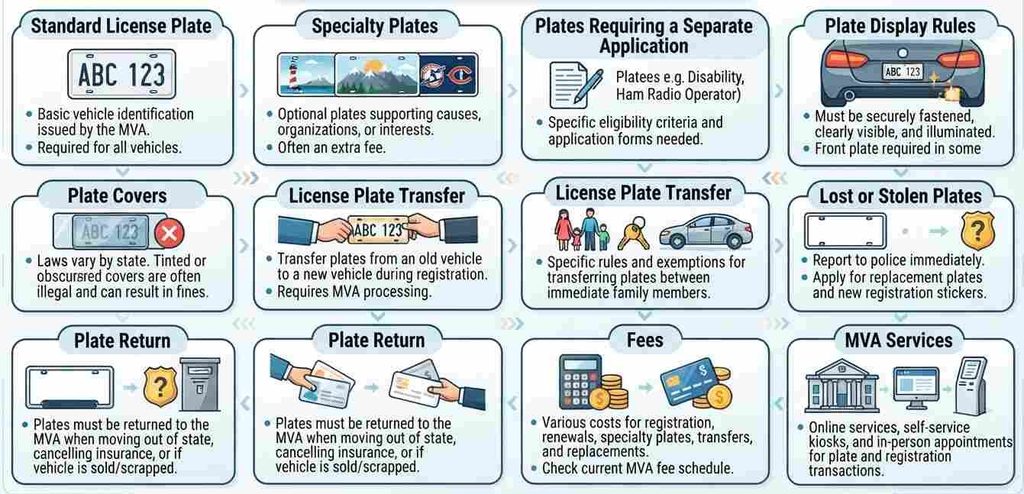
- License Plates and Registration: Maryland license plates identify a vehicle and show that it is properly registered with the Maryland Motor Vehicle Administration (MVA). Plates are usually issued when a vehicle is titled and registered.
- Standard License Plate: A standard Maryland license plate is issued as part of the vehicle registration process.
- Specialty Plates: During registration, drivers may select specialty plates such as Agricultural and Chesapeake Bay plates. These plates require an additional annual fee.
- Plates Requiring a Separate Application: Disability, Military & Veteran, Organizational, Specialty, and Personalized plates may require a separate application. Some plate types can include a personalized message.
- Plate Display Rules: Passenger vehicles generally must display both front and rear plates. Plates must be securely attached, clearly visible, and free from alterations.
- Plate Covers: Tinted, colored, or illuminated covers that block any part of the plate or interfere with its readability are prohibited in Maryland.
- License Plate Transfer: In certain situations, an existing plate can be transferred to a new vehicle. The new vehicle may need to be titled in the same name, and the plate type must meet MVA transfer requirements.
- Family Transfer: Plates may be transferred between a spouse, parent, or child in qualifying vehicle gift transactions, subject to MVA requirements.
- Lost or Stolen Plates: If a plate is lost or stolen, the owner should notify the MVA and submit any required statement or documentation. Replacement plates can then be requested when applicable.
- Plate Return: Plates may need to be returned after a vehicle is sold or scrapped, insurance is cancelled, or the owner moves out of Maryland, depending on the circumstances.
- Fees: New, specialty, replacement, and transferred plates may involve fees. The amount varies by plate type and the applicable MVA requirements.
- Refunds: Refunds may be available in certain situations involving unused registration. Eligibility can depend on the remaining registration period, plate status, and other MVA requirements.
- MVA Services: Maryland license plate services are available through MVA branch offices, myMVA, and certain mail-in services. The Maryland License Plate website is informational only and does not issue plates or process vehicle registrations. Actual plate issuance and registration services are handled by the Maryland MVA.
Maryland License Plate Categories
Quick-reference directory of official vehicle registration and plate types.
Specialty Plates
Custom organizational and commemorative designs supporting causes or Maryland pride.
Commercial Plates
Mandatory registration for trucks, freight haulers, and business-owned fleets.
Antique & Historic
For vehicles 20+ years old maintained for exhibitions with special operating rules.
Veteran & Military
Dedicated branch emblems and service awards honoring veterans and active-duty personnel.
Temporary Plates
Short-term paper permits issued by dealerships for newly acquired vehicles.
Personalized & Vanity
Custom letter and number combinations subject to MVA approval guidelines.
Disability Plates
Accessible parking identification tags issued to individuals with certified mobility needs.
Method: Online or MVA Kiosk / Mail-In
Process:- Browse available organizational and commemorative designs.
- Select sequential or personalized plate numbering options.
- Submit application and required program contributions.
- Receive plates via mail or pick up at designated MVA office.
Method: In-Person or Business MVA Portal
Process:- Complete commercial vehicle registration documentation.
- Provide weight certification, title, and insurance proof.
- Pay applicable gross vehicle weight (GVW) registration fees.
- Mount front and rear commercial plates securely.
Method: Mail-In or In-Person MVA Submission
Process:- Verify vehicle meets age requirement (typically 20+ years old).
- Complete historic vehicle registration certification forms.
- Certify vehicle is maintained for exhibitions and club activities.
- Pay one-time historic registration and plate fees.
Method: Mail-In or MVA Office Application
Process:- Select military branch emblem, ribbon, or veteran status.
- Provide military discharge papers (DD-214) or service proof.
- Complete specialized military plate application paperwork.
- Submit verified application to the MVA for processing.
Method: Dealership Issued or MVA Counter
Process:- Purchase vehicle through a licensed dealer or register privately.
- Fulfill temporary registration and safety inspection prerequisites.
- Receive short-term paper permit or temporary tag.
- Display securely in rear window or designated plate bracket.
Method: Online Configurator Portal
Process:- Access the official MVA custom plate availability tool.
- Enter desired letter and number combinations.
- Ensure text complies with state obscenity and formatting guidelines.
- Submit order and pay custom plate manufacturing fees.
Method: Mail-In or In-Person MVA Application
Process:- Have a licensed physician certify mobility impairment forms.
- Complete disability parking plate or placard application.
- Submit medical certification and vehicle registration details.
- Receive accessible plates/placards (exempt from certain fees).
License Plate Requirements
Maryland license plates must be displayed according to Maryland Motor Vehicle Administration requirements. For passenger vehicles, Maryland requires plates on both the front and rear unless the vehicle has an authorized exception. Plates must remain securely attached, clearly visible, and unaltered. Drivers must display registration stickers as instructed by the MVA. These requirements apply to common Maryland plates used for registered vehicles, though display rules can vary by vehicle class or specific authorization. A plate should remain readable at all times, and drivers should avoid covers or other items that interfere with the plate number or other required information.
Front and Rear Plate Requirements
For a standard passenger vehicle, Maryland car plates are generally required on both the front and rear of the vehicle. The MVA states that passenger vehicles must display plates on the front and rear unless otherwise authorized.
Key points include:
- Front plate: Required for passenger vehicles unless an authorized exception applies.
- Rear plate: Required on the rear of the vehicle.
- Vehicle class: Display requirements can differ for certain vehicle types or authorized situations.
- Valid registration: The vehicle must have current Maryland registration.
- Plate condition: Plates must remain visible and unaltered.
Plate Mounting and Visibility
Maryland requires md license plates to be securely attached to the vehicle and clearly visible. The plate should remain readable without alterations, objects, or covers blocking important information.
Drivers should follow these basic display requirements:
- Attach the plate securely to the vehicle.
- Keep the plate clearly visible.
- Do not alter the plate.
- Keep the plate number and required information readable.
- Do not use a plate cover that blocks any portion of the plate or makes it difficult to read.
- Avoid tinted, colored, or illuminated covers that interfere with visibility.
Registration Stickers
A Maryland registration normally includes license plates, a registration card, and registration stickers. The MVA states that plates must display registration stickers as instructed.
Important points include:
- Registration stickers are provided as part of the registration process.
- Stickers must be displayed according to MVA instructions.
- Keep the registration current through the MVA renewal process.
- Do not cover or alter required registration information.
- If a sticker is lost or damaged, replacement options are available through MVA services.
What Does the Current Maryland License Plate Look Like?
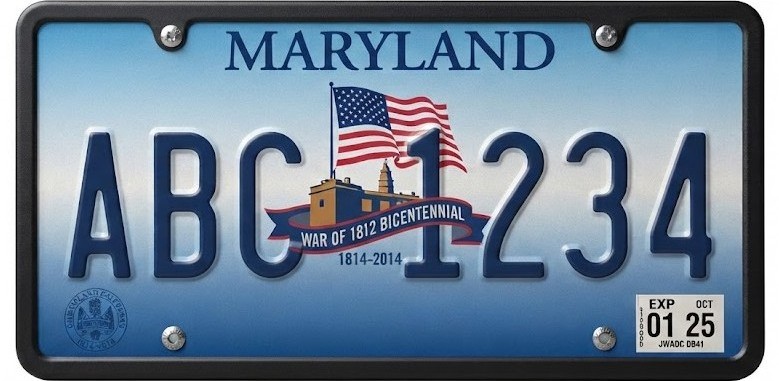
The current Maryland license plate is the Maryland Proud standard issue plate. It uses a reflective white background with the Maryland flag across the lower portion. “Maryland” appears in red at the top, while the registration characters are displayed in black. The design became the standard Maryland plate in 2016 and replaced the earlier War of 1812 design. Older Maryland plates can still remain in circulation when they continue to meet Maryland registration requirements.
Proud Standard Plate
The Maryland Proud plate is the standard issue Maryland state license plate used for many common vehicle registrations.
Its main visual features include:
- Plate name: Maryland Proud
- Background: Reflective white
- State name: “Maryland” in red
- Lower section: Maryland flag graphic
- Plate number: Black registration characters
- Design status: Current standard issue plate
- Common use: Passenger vehicles and other eligible vehicle classes
Flag Design and Colors
The Maryland flag is the most recognizable graphic element on the current Maryland plates. It appears across the lower section of the standard plate and uses the state’s traditional color combination.
Key visual elements include:
- Black and gold: Calvert family pattern
- Red and white: Crossland family pattern
- Reflective white: Main plate background
- Red lettering: “Maryland” at the top
- Black characters: Registration plate number
- Flag placement: Lower portion of the plate
Maryland License Plate Number Format
The current standard Maryland license plate number format is 1AB2345. This format contains seven characters made up of numbers and letters. Older registration series can remain active, so motorists may see different character arrangements on existing Maryland plates. The registration number is displayed as the plate’s primary identifying tag information. It is used in vehicle registration records and by authorized agencies or systems. The characters themselves should not be presented as personally identifying the vehicle owner.
For the current format, the visible structure is:
- Example: 1AB2345
- Total characters: 7
- Character types: Numbers and letters
- Display: Printed prominently on the plate
- Purpose: Vehicle registration and tag identification
- Older plates: Previous series may still be in circulation
Maryland License Plate Fees and Registration Costs
Maryland license plate costs depend on the type of plate, vehicle class, vehicle weight, and registration period. The standard Maryland license plate is issued as part of vehicle registration, so there is no separate standard-plate charge listed by the MVA. Registration fees below are based on one year; Maryland registrations can be issued or renewed for one, two, or three years.
| Fee Type | Current Cost |
|---|---|
| Passenger car up to 3,500 lbs | $120.50 per year |
| Passenger car 3,501–3,700 lbs | $125.50 per year |
| Passenger car over 3,700 lbs | $191.50 per year |
| Motorcycle | $105 per year |
| Passenger vehicle operated for hire | $220 per year |
| Multipurpose vehicle up to 3,500 lbs | $120.50 per year |
| Multipurpose vehicle 3,501–3,700 lbs | $125.50 per year |
| Multipurpose vehicle over 3,700 lbs | $191.50 per year |
| Historic vehicle | $55.50 per year |
| Historic vehicle over 60 years old | $50 one-time |
| Street rod | $55 one-time |
| Temporary registration | $50 |
| Registration/tag transfer | $15 |
| Replacement tag | $40 |
| Duplicate registration card or sticker | $5 |
| Personalized/vanity plate | $50 additional per year |
| Organizational plate without logo | $20 |
| Organizational plate with logo | $30 |
| Chesapeake Bay plate | $25 initial fee + $12.50 per year |
| Agriculture plate | $25 initial fee + $12.50 per year |
| Amateur Radio plate | $5 additional per year |
| 1910 Vintage Reproduction plate | $100 initial + $25 per renewal period |
| Nonresident permit | $27 |
How to Replace a License Plate
Maryland license plate replacement is handled through the Maryland Motor Vehicle Administration (MVA) when a plate is lost, stolen, or damaged. The replacement process depends on what happened to the plate and may require reporting the issue, providing the plate number or vehicle information, and requesting a substitute plate or sticker.
Lost or Stolen Maryland License Plate
If you have a lost Maryland license plate or a stolen plate, the MVA provides a specific reporting process.
- Report a stolen plate to local law enforcement and obtain a police report or report number.
- Notify the MVA as soon as possible.
- Complete the Certified Statement/Receipt (VR-461) for lost or stolen plates.
- Submit the form through your myMVA account or at an MVA branch.
- If the plate is not recovered, request substitute plates through myMVA or an MVA vehicle-services appointment.
- Bring the police report when visiting an MVA branch for stolen plates.
- Do not drive the vehicle without valid Maryland plates.
Damaged Plate and Sticker Replacement
A damaged plate can be replaced through MVA plate services. Maryland also provides an application for duplicate or substitute plates and stickers, VR-009. The current fee for a replacement tag is $40, while an additional or duplicate registration card or sticker costs $5. A replacement plate receives a new plate number when required by the MVA process. If lost or stolen plates are later found after substitute plates have been issued, follow MVA instructions rather than using both sets.
License Plate Renewal and Registration
Maryland license plate renewal is connected to the vehicle’s registration, not to renewing the physical plate as a separate item. The Maryland Motor Vehicle Administration (MVA) provides the plate, registration card, and registration sticker as part of vehicle registration. When the registration reaches its expiration date, the vehicle must be renewed before it is driven legally on Maryland roads.
Registration Renewal for Maryland Plates
The MVA sends a renewal notice when a vehicle’s registration is approaching its expiration date. Owners should complete the renewal before the expiration date to keep the vehicle properly registered.
Key points about Maryland registration renewal include:
- Registration period: Eligible vehicles can have 1-, 2-, or 3-year registration periods.
- Renewal notice: The MVA sends information when registration renewal is due.
- Online renewal: Eligible registrations can be renewed through myMVA online services.
- Registration card: Renewal keeps the vehicle’s registration record current.
- Registration sticker: The required sticker is provided according to MVA procedures.
- Physical plate: The existing Maryland plate normally remains on the vehicle during renewal.
- New plate: A new plate is not normally required just because the registration expires.
- Expired registration: The vehicle should not be operated on public roads with expired registration.
Can License Plates Be Transferred?
A Maryland license plate transfer may be allowed when MVA requirements are met. A plate can generally move from an old vehicle to a new vehicle when the new vehicle is titled in the same name and the required vehicle and plate-class conditions are satisfied. The transfer is handled as part of the new vehicle registration transaction. It is not treated as an informal exchange of plates between two vehicles.
Same Owner Requirement
The Maryland license plate transfer generally requires the new vehicle to be titled in the same name as the vehicle from which the plate is being transferred. This ownership requirement helps connect the existing registration and plate record with the new vehicle. If the ownership information does not meet MVA requirements, the existing plate may not qualify for transfer.
Qualifying Vehicle Class
The vehicles involved in a Maryland plates transfer must meet the applicable vehicle-class requirements. MVA transfer rules can apply to qualifying Class A, Class M, and Class E vehicles. The registration class of the new vehicle can affect whether the existing plate can be transferred or whether a new plate must be issued.
What Happens to the Old Vehicle?
The old vehicle generally must have been sold, traded, junked, or otherwise disposed of before the plate is transferred to another qualifying vehicle. This connects the plate transfer with the replacement vehicle registration rather than leaving the same plate active on two vehicles.
Same Plate Type
The plate type is another factor in a license plate Maryland transfer. MVA requirements can vary based on the type of plate being transferred. A standard plate and certain specialty or personalized plates may have different conditions, so the specific plate category should be checked as part of the registration transaction.
Family Plate Transfers
Maryland permits certain transfers involving immediate family members when the transaction meets MVA requirements. Qualifying family relationships can include a spouse, parent, or child in applicable gift or transfer situations. The family relationship alone does not automatically approve the transfer; the vehicle, plate, ownership, and registration requirements must still be satisfied.
License Plate Transfer Fee
The current MVA registration/tag transfer fee is $15. A difference in registration fees may apply when the plate is transferred between qualifying vehicle classes. The final amount can depend on the new vehicle and its registration requirements.
How the Plate Transfer Is Completed
A Maryland license plate transfer is completed during the new vehicle registration process. MVA reviews the plate information, ownership details, vehicle class, and registration requirements before completing the transaction. If the new vehicle does not qualify for the existing plate, MVA may require a new plate instead.
License Plate Return and Surrender
Maryland plates must be returned to the Maryland Motor Vehicle Administration (MVA) when they are no longer needed. Returning Maryland license plates closes the plate and registration record and can help prevent insurance penalties, fines, and future fees. A plate may be kept when it is being transferred to another vehicle that qualifies under MVA rules.
Returning Plates After Selling or Scrapping a Vehicle
If you sell, trade, junk, or scrap a vehicle, you generally need to remove the plates and return them to the MVA. The plates stay with the seller rather than the vehicle. You can use an MVA 24-hour tag return box or mail the plates with the required Tag Return Form (VR-027).
Returning Plates After Insurance Cancellation
If you cancel insurance and do not replace the coverage, you must return the plates before the policy ends. Maryland advises keeping insurance active until the MVA confirms the plate return. After receiving the return receipt, you can cancel the insurance coverage.
Moving Out of Maryland
If you move out of Maryland and no longer need your Maryland registration, return your plates to the MVA. The Tag Return Form allows you to select moving to a new state as the reason for return. Keep the cancellation receipt for your records.
Maryland Registration Refund
A registration refund may be available when the plate expiration date is more than 12 months away. MVA states that unused plates with the sticker not affixed may qualify for a 100% refund, while plates with more than one year remaining may qualify for a 50% refund. Plates with less than one year remaining generally do not qualify.
License Plate Laws and Display Rules
Maryland plate laws require Maryland license plates to remain properly displayed, readable, visible, and securely attached to the vehicle. Passenger vehicles generally need both front and rear plates unless an authorized exception applies.
Secure Attachment and Visibility
Drivers must keep their MD license plates securely attached and clearly visible. The plate should remain in a position where the registration characters can be read without obstruction.
- Plate must be securely attached to the vehicle.
- Characters and markings must remain readable.
- The plate should be clearly visible from the required viewing position.
- Plates should not be altered or modified.
- Nothing should block any part of the plate.
License Plate Covers
A plate cover can create a violation when it blocks any portion of the plate or makes the registration information difficult to read. Covers should not interfere with the visibility of the plate.
- Avoid covers that obscure letters or numbers.
- Tinted or colored covers can be prohibited when they reduce readability.
- Illuminated covers should not interfere with plate visibility.
- Objects placed around the plate should not hide required information.
Registration Sticker Display
The registration sticker must be displayed as directed by the Maryland MVA. Drivers should keep the sticker properly placed and visible and should not alter or cover the required registration information.
Front and Rear Plate Requirements
Most passenger vehicles must display both front and rear Maryland license plates. An exception may apply when Maryland requirements specifically authorize it. Both plates should remain securely mounted, visible, and readable during vehicle operation.
Frequently Asked Questions
Maryland license plates raise about plate designs, number formats, registration, personalization, fees, transfers, and replacement. The details about Maryland license plates, including front and rear plate requirements, getting a new plate, personalized options, lost or stolen plates, and returning plates to the MVA. These answers provide quick information for vehicle owners who need to check basic Maryland plate rules and registration-related requirements.
What does the current Maryland license plate look like?
The current standard Maryland license plate is the Maryland Proud plate. It has a reflective white background with the Maryland flag displayed across the lower portion. “Maryland” appears in red at the top, with dark registration characters in the center. Older Maryland plates can remain in circulation when they are still valid.
What is the current Maryland license plate number format?
The current standard plate uses a serial format commonly represented as 1AB2345. The plate number identifies the registration record associated with the vehicle. MVA materials also refer to the current MD Proud/Standard Flag Tag plate scheme as #AA#### for certain Class A, M, and E applications.
Do Maryland vehicles need front and rear license plates?
Most passenger vehicles in Maryland must display front and rear plates. Both plates must be securely attached, clearly visible, and readable. An exception may apply when specifically authorized under Maryland requirements. Plate covers or objects that block any portion of the plate or make it difficult to read are prohibited.
How do I get a new Maryland license plate?
A new Maryland license plate is normally issued when you title and register a vehicle. The MVA may require a valid vehicle title or title application, proof of Maryland vehicle insurance, registration documents, and applicable fees. Plates can be issued during an MVA service transaction or mailed when ordered through an eligible online process.
Can I personalize my Maryland license plate?
Maryland offers personalized plates, sometimes called vanity plates. Depending on the vehicle type, a personalized message can contain up to seven letters, numbers, and spaces. Motorcycle and individual disability personalized plates can contain up to six characters. Symbols, diagrams, slashes, and other characters are not permitted.